Understanding Common Cooling Tower Problems
Cooling towers often continue operating even as underlying problems develop in the background. Water may still circulate, fans may still run, and temperatures may appear acceptable, making it easy to assume everything is working as expected. In reality, many cooling tower problems develop gradually. Changes in water quality, system operation, mechanical condition, or maintenance practices can gradually create conditions that affect performance and reliability.
Recurring issues are also rarely isolated events. High bacterial counts, scale, corrosion, poor cooling performance, or ongoing chemical instability often point to broader system conditions that require attention. Recognising problems early can help reduce scale, corrosion, biofilm growth, Legionella risk, energy loss, unplanned downtime, and long-term reliability issues before they become much harder to manage.
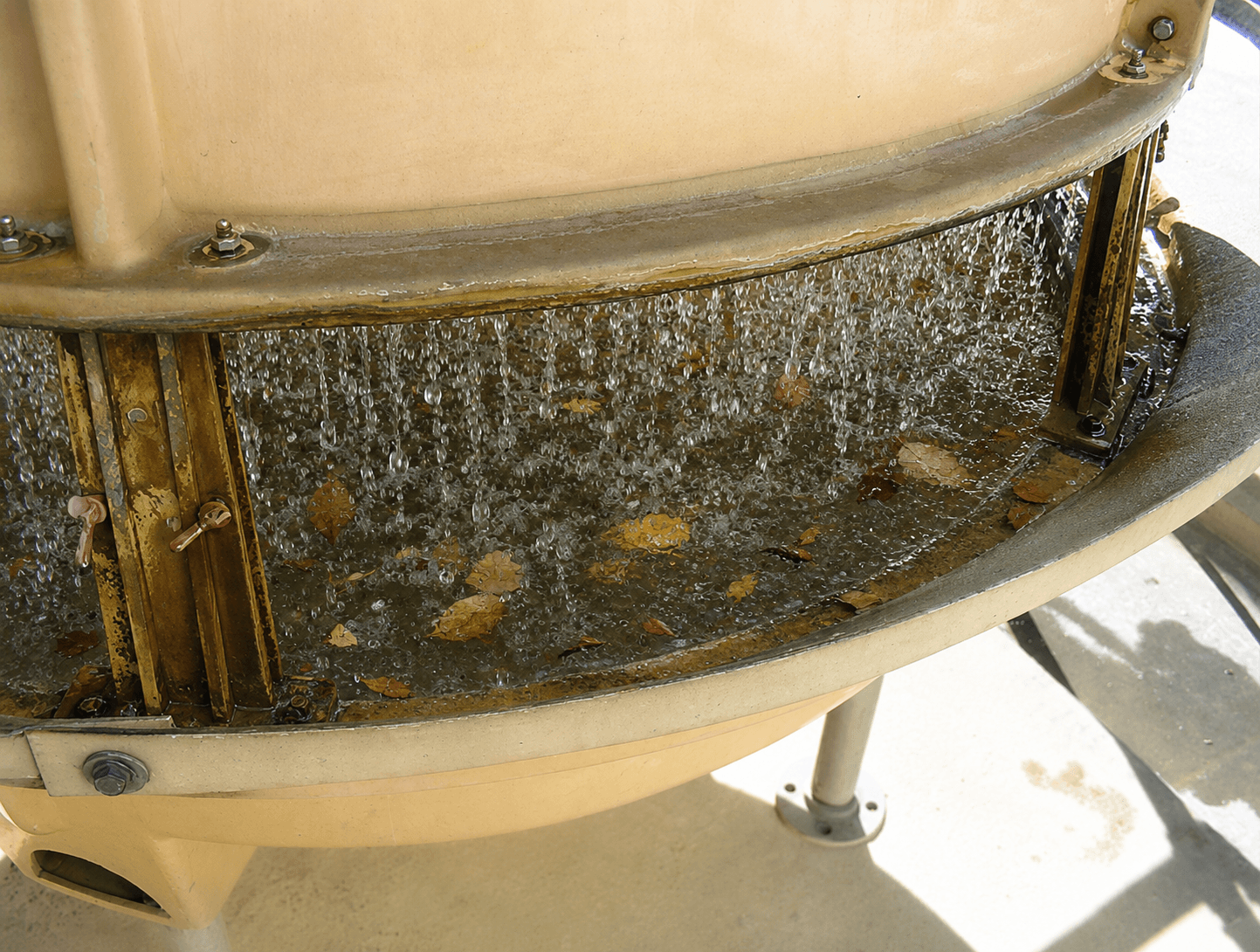
Water Quality and Bacteria Problems
High bacteria counts, Legionella, biofilm, water clarity, scale and unstable water conditions.
Most cooling tower problems do not occur in isolation. Issues such as bacterial growth, fouling, corrosion, water loss, and declining performance often influence one another, meaning the same symptom may appear across multiple categories. Reviewing related problems can help build a clearer picture of the conditions affecting your system.
If cooling tower problems keep recurring despite regular servicing, cleaning, or water treatment support, it may be time to take a closer look at how the system is being managed and maintained. The Tandex team can help evaluate system condition, identify opportunities for improvement and implement practical cooling tower treatment programs designed to improve performance, support compliance, and protect equipment over the long term.
Water Quality and Bacteria Problems
Water quality problems are often among the earliest indicators that conditions within a cooling tower are changing. While some issues become apparent through test results, others may appear as increased chemical demand, visible changes in water quality, recurring bacterial concerns, or a gradual decline in system cleanliness. Explore the problems below to identify symptoms that may be affecting your cooling tower.
For facility and maintenance teams, high bacteria counts often raise immediate concern because they can affect system cleanliness, treatment confidence, compliance pressure and Legionella risk.
Why This Happens
High bacteria results usually indicate that something within the tower is making bacterial growth harder to control. While the cause is not always obvious from a single result, changes in tower cleanliness, treatment performance, or operating conditions can all play a role. Common contributing factors include:
- Inadequate disinfectant control
- Biofilm growth inside the tower
- Poor tower cleanliness
- Blocked or uneven water distribution
- Low flow or stagnant areas
- Process contamination entering the system
- Reduced monitoring or delayed corrective action
What This Can Lead To
High bacteria counts rarely stay just a laboratory result. If the conditions causing the increase remain unchanged, they can create additional treatment, maintenance and compliance challenges, including:
- Increased Legionella risk
- Recurring high bacterial results
- Greater cleaning and disinfection requirements
- Reduced treatment effectiveness
- Biofilm becoming harder to control
- Microbiologically influenced corrosion
- Increased compliance pressure
What Typically Needs To Happen Next
One elevated result may not tell the whole story. Looking at recent trends and tower condition often provides a better understanding of whether the issue is isolated or part of a recurring pattern. Building a clearer picture often starts with:
- Recent bacteria and Legionella results
- Tower cleanliness and visible fouling
- Disinfectant levels and dosing performance
- Cleaning and disinfection history
- Water distribution and flow conditions
- Recent changes in operation or maintenance
If high bacteria counts continue returning, the system may need a broader review rather than repeated short-term corrections after each result.
Learn More About This Issue, Related Problems, and Solutions
- How to Keep Cooling Towers Safe and Efficient Year-Round
- The Hidden Risk Lurking in Cooling Towers: What You Need to Know
- Everything You Need to Know About Legionella and Cooling Tower Safety
- Critical Reasons to Improve Access to Drift Eliminators Now
- The Truth About Hidden Fouling in Cooling Towers and Super Cleans
- Important RMP Compliance Items Every Responsible Person Should Know
For facility managers and responsible persons, the concern is not only the result itself. It is also important to understand what may have allowed Legionella to be detected and what needs to change to reduce the chance of it happening again.
Why This Happens
Legionella is more likely to be detected when the tower has conditions that allow bacteria to survive, grow, or remain protected from treatment. In many cases, the result appears sudden, but warning signs may have been developing earlier. Conditions that can increase the likelihood of detection include:
- Biofilm inside the tower
- High general bacteria levels
- Inadequate disinfectant control
- Poor tower cleanliness
- Stagnant or low-flow areas
- Blocked or uneven water distribution
- Delayed corrective action after earlier warning signs
What This Can Lead To
A Legionella detection is usually treated differently from other water quality results because it can trigger specific response requirements and closer scrutiny of the system. Depending on the result and site requirements, it may lead to:
- Urgent corrective action requirements
- Additional cleaning or disinfection
- Follow-up sampling
- Increased compliance pressure
- Closer review of treatment performance
- Disruption to normal maintenance schedules
- Concern around system safety
- Reduced confidence in ongoing control
What Typically Needs To Happen Next
After the immediate response is underway, the next step is understanding what was happening before the detection occurred. Recent test results, tower condition, and treatment records can help show whether control was already becoming less reliable. Key areas to check include:
- Legionella result level and laboratory history
- Recent general bacteria results
- Cleaning and disinfection records
- Tower cleanliness and visible fouling
- Disinfectant control and dosing performance
- Water distribution and stagnant areas
- Risk Management Plan requirements
Once the immediate actions are complete, it is important to understand whether the detection was isolated or part of a recurring control issue.
Learn More About This Issue, Related Problems, and Solutions
- The Hidden Risk Lurking in Cooling Towers: What You Need to Know
- Everything You Need to Know About Legionella and Cooling Tower Safety
- Important RMP Compliance Items Every Responsible Person Should Know
- How to Keep Cooling Towers Safe and Efficient Year-Round
- The Truth About Hidden Fouling in Cooling Towers and Super Cleans
While poor water clarity does not always indicate a serious problem on its own, it often provides an early warning that contaminants, biological activity or other issues are beginning to affect the tower.
Why This Happens
Dirty, cloudy, or discoloured water is often one of the first visible signs that conditions within the cooling tower have changed. While the appearance alone does not identify the cause, it can provide useful clues about what may be happening elsewhere in the system. Some of the more common explanations include:
- Suspended solids accumulating in the water
- Dust, dirt, or environmental contamination entering the tower
- Organic matter building up within the system
- High levels of bacterial activity
- Biofilm and biological fouling
- Corrosion products circulating through the system
- Ineffective filtration or solids removal
- Poor tower housekeeping and cleanliness
What This Can Lead To
Changes in the appearance of water are not always just cosmetic. The same conditions affecting water clarity can also make the tower more difficult to keep clean, monitor, and control, potentially contributing to:
- Increased fouling and deposit formation
- Higher bacteria levels
- Reduced treatment effectiveness
- Biofilm development
- Blocked nozzles and distribution problems
- More frequent cleaning requirements
- Reduced cooling tower cleanliness
What Typically Needs To Happen Next
The appearance of the water can often help narrow down where the problem may be coming from. Looking at the colour, type of contamination and recent changes within the system can help identify the most likely cause. Clues are often found in:
- Water quality test results
- Visible contamination within the tower
- Bacteria and Legionella trends
- Recent cleaning history
- Filtration and solids removal performance
- Corrosion or deposit formation
- Recent operating changes
Cloudy or dirty water does not always indicate a major problem, but it is rarely something that should be ignored. Understanding why water clarity has changed can often help identify developing issues before they become more difficult and expensive to manage.
Learn More About This Issue, Related Problems, and Solutions
Many operators only become aware of scale after it is identified during maintenance, inspection, or cleaning activities. By that stage, deposits may already be reducing efficiency and increasing operating costs.
Why This Happens
Scale tends to form when mineral levels and operating conditions move outside the range needed to keep deposits under control. As water evaporates within the cooling tower, dissolved minerals become more concentrated, increasing the likelihood of scale developing. Scale is often linked to a combination of factors such as:
- Poor control of water chemistry
- High mineral levels in make-up water
- Excessively concentrated water conditions
- Inadequate scale inhibitor performance
- Unstable treatment control
- Changes in make-up water quality
- Extended periods without monitoring or adjustment
What This Can Lead To
The effects of scale are often felt through declining efficiency rather than immediate equipment failure. Even relatively thin deposits can make it harder for the system to transfer heat effectively, resulting in:
- Reduced cooling performance
- Reduced heat-transfer efficiency
- Higher energy consumption
- Restricted water flow
- Fouling of heat exchangers and equipment
- Increased maintenance requirements
- Higher operating costs
- Premature equipment deterioration
What Typically Needs To Happen Next
Once the scale has been identified, the next priority is understanding how long it has been developing and what conditions allowed it to form. Reviewing both the deposits themselves and recent water management practices can help determine the most appropriate response. Areas that commonly provide insight include:
- Visible scale deposits throughout the system
- Water chemistry results and trends
- Cycles of concentration
- Make-up water quality
- Treatment performance and dosing records
- Equipment affected by scaling
- Recent operating changes
Removing scale addresses the visible problem, but long-term improvement usually depends on understanding what allowed deposits to form in the first place.
Learn More About This Issue, Related Problems, and Solutions
- Expert LSI And RSI Calculator For Accurate Water Stability Results
- How to Keep Cooling Towers Safe and Efficient Year-Round
- The Real Value of Reliable Industrial Water Treatment
- The Truth About Hidden Fouling in Cooling Towers and Super Cleans
- The Hidden Financial Hit: Why Downtime Destroys Revenue First
Chemical overuse is not always caused by the chemicals themselves. It often points to changing water conditions, control issues, water loss, contamination, or operating conditions that are making the treatment program work harder than it should.
Why This Happens
Cooling tower water becomes harder to control when the balance between evaporation, bleed, make-up water, and treatment is unstable. When that balance shifts, chemical use can increase, and readings may move in and out of range more often. Issues that frequently sit behind this type of instability include:
- Poor conductivity control
- Low cycles of concentration
- Excessive bleed or water loss
- Changes in make-up water quality
- Chemical feed equipment issues
- Incorrect dosing settings
- Process contamination entering the system
- Inconsistent monitoring or adjustment
What This Can Lead To
When water conditions keep shifting, the system can become more expensive and time-consuming to manage. Treatment may still be occurring, but it may not be operating as efficiently or predictably as it should. This may contribute to:
- Higher chemical consumption
- Increased water use
- Recurring out-of-range results
- More frequent manual adjustments
- Reduced treatment stability
- Greater risk of scale or corrosion
- Increased maintenance workload
- Higher operating costs
What Typically Needs To Happen Next
The most useful starting point is to work out whether the tower is using more water, more chemicals, or both. From there, it becomes easier to see whether the issue is related to control settings, equipment performance, make-up water quality, or changing operating conditions. Useful information often comes from:
- Conductivity trends
- Chemical usage records
- Water meter or bleed data
- Cycles of concentration
- Make-up water quality
- Chemical dosing equipment
- Recent changes in site operation
- Signs of leaks, overflow or excessive bleed
If chemical use continues to increase or readings keep drifting out of range, the treatment program may need to be reviewed alongside the tower’s operating conditions, not just adjusted again.
Learn More About This Issue, Related Problems, and Solutions
For facility and maintenance teams, high bacteria counts often raise immediate concern because they can affect system cleanliness, treatment confidence, compliance pressure and Legionella risk.
Why This Happens
High bacteria results usually indicate that something within the tower is making bacterial growth harder to control. While the cause is not always obvious from a single result, changes in tower cleanliness, treatment performance, or operating conditions can all play a role. Common contributing factors include:
- Inadequate disinfectant control
- Biofilm growth inside the tower
- Poor tower cleanliness
- Blocked or uneven water distribution
- Low flow or stagnant areas
- Process contamination entering the system
- Reduced monitoring or delayed corrective action
What This Can Lead To
High bacteria counts rarely stay just a laboratory result. If the conditions causing the increase remain unchanged, they can create additional treatment, maintenance and compliance challenges, including:
- Increased Legionella risk
- Recurring high bacterial results
- Greater cleaning and disinfection requirements
- Reduced treatment effectiveness
- Biofilm becoming harder to control
- Microbiologically influenced corrosion
- Increased compliance pressure
What Typically Needs To Happen Next
One elevated result may not tell the whole story. Looking at recent trends and tower condition often provides a better understanding of whether the issue is isolated or part of a recurring pattern. Building a clearer picture often starts with:
- Recent bacteria and Legionella results
- Tower cleanliness and visible fouling
- Disinfectant levels and dosing performance
- Cleaning and disinfection history
- Water distribution and flow conditions
- Recent changes in operation or maintenance
If high bacteria counts continue returning, the system may need a broader review rather than repeated short-term corrections after each result.
Learn More About This Issue, Related Problems, and Solutions
- How to Keep Cooling Towers Safe and Efficient Year-Round
- The Hidden Risk Lurking in Cooling Towers: What You Need to Know
- Everything You Need to Know About Legionella and Cooling Tower Safety
- Critical Reasons to Improve Access to Drift Eliminators Now
- The Truth About Hidden Fouling in Cooling Towers and Super Cleans
- Important RMP Compliance Items Every Responsible Person Should Know
For facility managers and responsible persons, the concern is not only the result itself. It is also important to understand what may have allowed Legionella to be detected and what needs to change to reduce the chance of it happening again.
Why This Happens
Legionella is more likely to be detected when the tower has conditions that allow bacteria to survive, grow, or remain protected from treatment. In many cases, the result appears sudden, but warning signs may have been developing earlier. Conditions that can increase the likelihood of detection include:
- Biofilm inside the tower
- High general bacteria levels
- Inadequate disinfectant control
- Poor tower cleanliness
- Stagnant or low-flow areas
- Blocked or uneven water distribution
- Delayed corrective action after earlier warning signs
What This Can Lead To
A Legionella detection is usually treated differently from other water quality results because it can trigger specific response requirements and closer scrutiny of the system. Depending on the result and site requirements, it may lead to:
- Urgent corrective action requirements
- Additional cleaning or disinfection
- Follow-up sampling
- Increased compliance pressure
- Closer review of treatment performance
- Disruption to normal maintenance schedules
- Concern around system safety
- Reduced confidence in ongoing control
What Typically Needs To Happen Next
After the immediate response is underway, the next step is understanding what was happening before the detection occurred. Recent test results, tower condition, and treatment records can help show whether control was already becoming less reliable. Key areas to check include:
- Legionella result level and laboratory history
- Recent general bacteria results
- Cleaning and disinfection records
- Tower cleanliness and visible fouling
- Disinfectant control and dosing performance
- Water distribution and stagnant areas
- Risk Management Plan requirements
Once the immediate actions are complete, it is important to understand whether the detection was isolated or part of a recurring control issue.
Learn More About This Issue, Related Problems, and Solutions
- The Hidden Risk Lurking in Cooling Towers: What You Need to Know
- Everything You Need to Know About Legionella and Cooling Tower Safety
- Important RMP Compliance Items Every Responsible Person Should Know
- How to Keep Cooling Towers Safe and Efficient Year-Round
- The Truth About Hidden Fouling in Cooling Towers and Super Cleans
While poor water clarity does not always indicate a serious problem on its own, it often provides an early warning that contaminants, biological activity or other issues are beginning to affect the tower.
Why This Happens
Dirty, cloudy, or discoloured water is often one of the first visible signs that conditions within the cooling tower have changed. While the appearance alone does not identify the cause, it can provide useful clues about what may be happening elsewhere in the system. Some of the more common explanations include:
- Suspended solids accumulating in the water
- Dust, dirt, or environmental contamination entering the tower
- Organic matter building up within the system
- High levels of bacterial activity
- Biofilm and biological fouling
- Corrosion products circulating through the system
- Ineffective filtration or solids removal
- Poor tower housekeeping and cleanliness
What This Can Lead To
Changes in the appearance of water are not always just cosmetic. The same conditions affecting water clarity can also make the tower more difficult to keep clean, monitor, and control, potentially contributing to:
- Increased fouling and deposit formation
- Higher bacteria levels
- Reduced treatment effectiveness
- Biofilm development
- Blocked nozzles and distribution problems
- More frequent cleaning requirements
- Reduced cooling tower cleanliness
What Typically Needs To Happen Next
The appearance of the water can often help narrow down where the problem may be coming from. Looking at the colour, type of contamination and recent changes within the system can help identify the most likely cause. Clues are often found in:
- Water quality test results
- Visible contamination within the tower
- Bacteria and Legionella trends
- Recent cleaning history
- Filtration and solids removal performance
- Corrosion or deposit formation
- Recent operating changes
Cloudy or dirty water does not always indicate a major problem, but it is rarely something that should be ignored. Understanding why water clarity has changed can often help identify developing issues before they become more difficult and expensive to manage.
Learn More About This Issue, Related Problems, and Solutions
Many operators only become aware of scale after it is identified during maintenance, inspection, or cleaning activities. By that stage, deposits may already be reducing efficiency and increasing operating costs.
Why This Happens
Scale tends to form when mineral levels and operating conditions move outside the range needed to keep deposits under control. As water evaporates within the cooling tower, dissolved minerals become more concentrated, increasing the likelihood of scale developing. Scale is often linked to a combination of factors such as:
- Poor control of water chemistry
- High mineral levels in make-up water
- Excessively concentrated water conditions
- Inadequate scale inhibitor performance
- Unstable treatment control
- Changes in make-up water quality
- Extended periods without monitoring or adjustment
What This Can Lead To
The effects of scale are often felt through declining efficiency rather than immediate equipment failure. Even relatively thin deposits can make it harder for the system to transfer heat effectively, resulting in:
- Reduced cooling performance
- Reduced heat-transfer efficiency
- Higher energy consumption
- Restricted water flow
- Fouling of heat exchangers and equipment
- Increased maintenance requirements
- Higher operating costs
- Premature equipment deterioration
What Typically Needs To Happen Next
Once the scale has been identified, the next priority is understanding how long it has been developing and what conditions allowed it to form. Reviewing both the deposits themselves and recent water management practices can help determine the most appropriate response. Areas that commonly provide insight include:
- Visible scale deposits throughout the system
- Water chemistry results and trends
- Cycles of concentration
- Make-up water quality
- Treatment performance and dosing records
- Equipment affected by scaling
- Recent operating changes
Removing scale addresses the visible problem, but long-term improvement usually depends on understanding what allowed deposits to form in the first place.
Learn More About This Issue, Related Problems, and Solutions
- Expert LSI And RSI Calculator For Accurate Water Stability Results
- How to Keep Cooling Towers Safe and Efficient Year-Round
- The Real Value of Reliable Industrial Water Treatment
- The Truth About Hidden Fouling in Cooling Towers and Super Cleans
- The Hidden Financial Hit: Why Downtime Destroys Revenue First
Chemical overuse is not always caused by the chemicals themselves. It often points to changing water conditions, control issues, water loss, contamination, or operating conditions that are making the treatment program work harder than it should.
Why This Happens
Cooling tower water becomes harder to control when the balance between evaporation, bleed, make-up water, and treatment is unstable. When that balance shifts, chemical use can increase, and readings may move in and out of range more often. Issues that frequently sit behind this type of instability include:
- Poor conductivity control
- Low cycles of concentration
- Excessive bleed or water loss
- Changes in make-up water quality
- Chemical feed equipment issues
- Incorrect dosing settings
- Process contamination entering the system
- Inconsistent monitoring or adjustment
What This Can Lead To
When water conditions keep shifting, the system can become more expensive and time-consuming to manage. Treatment may still be occurring, but it may not be operating as efficiently or predictably as it should. This may contribute to:
- Higher chemical consumption
- Increased water use
- Recurring out-of-range results
- More frequent manual adjustments
- Reduced treatment stability
- Greater risk of scale or corrosion
- Increased maintenance workload
- Higher operating costs
What Typically Needs To Happen Next
The most useful starting point is to work out whether the tower is using more water, more chemicals, or both. From there, it becomes easier to see whether the issue is related to control settings, equipment performance, make-up water quality, or changing operating conditions. Useful information often comes from:
- Conductivity trends
- Chemical usage records
- Water meter or bleed data
- Cycles of concentration
- Make-up water quality
- Chemical dosing equipment
- Recent changes in site operation
- Signs of leaks, overflow or excessive bleed
If chemical use continues to increase or readings keep drifting out of range, the treatment program may need to be reviewed alongside the tower’s operating conditions, not just adjusted again.
Learn More About This Issue, Related Problems, and Solutions
Finished reviewing Water Quality and Bacteria Problems?
If water quality issues are being accompanied by contamination, deposit buildup, or increasing cleaning requirements, the next section may help explain what is contributing to these conditions. You can also return to the problem overview to review another category.
Need help now? Talk to Tandex
Fouling, Deposits, and System Cleanliness Problems
Fouling and deposits can gradually build up inside cooling towers even when the system appears to be operating normally. Dirt, organic material, biological growth, and mineral deposits can accumulate on internal surfaces, affecting cleanliness, water distribution and overall system performance. These problems are often identified during inspections, cleaning activities or when other symptoms begin to emerge. Exploring the issues below may help explain why contamination is accumulating, why cleaning requirements are increasing or why parts of the tower are no longer performing as expected.
Because contamination can accumulate gradually over time, the extent of the problem is not always obvious until internal components are inspected or cleaned.
Why This Happens
Cooling towers are constantly exposed to contaminants from both the surrounding environment and the water circulating through the system. When those contaminants accumulate faster than they can be controlled or removed, deposits can begin building up throughout the tower. Material can accumulate from a variety of sources, including:
- Dirt, dust, and airborne debris entering the tower
- Organic matter such as leaves, pollen, and vegetation
- Biofilm and biological growth
- Suspended solids accumulating within the system
- Inadequate filtration or solids removal
- Poor tower housekeeping and cleanliness
- Process contamination entering the cooling water
What This Can Lead To
As contamination accumulates, the tower often becomes progressively harder to keep clean and operate efficiently. Deposits may interfere with normal water movement, create conditions that support further fouling, and increase the amount of maintenance required. This can result in:
- Blocked fill pack and tower internals
- Reduced water distribution performance
- Increased bacterial growth
- More frequent cleaning requirements
- Higher maintenance costs
- Reduced cooling performance
- Accelerated equipment deterioration
What Typically Needs To Happen Next
The type and location of the deposits often provide valuable clues about what is driving the problem. Looking at where fouling occurs, how quickly it returns, and what material accumulates can help narrow down the underlying cause. Looking closely at the following can help identify the source:
- The type of material accumulating within the tower
- Fill pack condition and cleanliness
- Basin condition and sediment levels
- Recent cleaning history
- Filtration and solids removal performance
- Water quality and bacteria trends
- Potential sources of contamination entering the system
Cleaning deposits removes the immediate problem, but understanding why contamination is accumulating can help reduce how quickly fouling returns in the future.
Learn More About This Issue, Related Problems, and Solutions
These issues are often identified during inspections or cleaning activities, particularly when dry sections of fill pack, blocked nozzles, or uneven flow patterns are observed.
Why This Happens
Even water distribution depends on multiple components working together throughout the tower. When one part of the distribution system becomes restricted, damaged, or contaminated, water may no longer reach all areas as intended. Distribution problems often develop because of issues such as:
- Blocked distribution nozzles
- Fouling within distribution components
- Debris restricting water flow
- Damaged or missing nozzles
- Uneven flow conditions
- Poorly maintained distribution systems
- Heavy contamination within the tower
What This Can Lead To
When parts of the tower receive less water than intended, cooling performance can become less consistent, and some components may be exposed to conditions they were not designed for. This can contribute to:
- Reduced cooling performance
- Dry areas within the fill pack
- Increased fouling in poorly wetted areas
- Higher operating temperatures
- Uneven tower performance
- Reduced efficiency
- Increased maintenance requirements
What Typically Needs To Happen Next
Distribution problems are often easiest to identify through physical inspection of the tower. Looking at how water flows through the system can help pinpoint where restrictions or deficiencies occur. The clearest indicators are often found in:
- Distribution nozzle condition
- Water flow patterns
- Fill pack wetting coverage
- Signs of fouling or blockage
- Basin and pump conditions
- Recent cleaning history
- Areas showing reduced performance
Restoring even water distribution can improve both cooling performance and tower cleanliness. Identifying the source of the restriction is often the key to preventing the problem from returning.
Learn More About This Issue, Related Problems, and Solutions
Because contamination can accumulate gradually over time, the extent of the problem is not always obvious until internal components are inspected or cleaned.
Why This Happens
Cooling towers are constantly exposed to contaminants from both the surrounding environment and the water circulating through the system. When those contaminants accumulate faster than they can be controlled or removed, deposits can begin building up throughout the tower. Material can accumulate from a variety of sources, including:
- Dirt, dust, and airborne debris entering the tower
- Organic matter such as leaves, pollen, and vegetation
- Biofilm and biological growth
- Suspended solids accumulating within the system
- Inadequate filtration or solids removal
- Poor tower housekeeping and cleanliness
- Process contamination entering the cooling water
What This Can Lead To
As contamination accumulates, the tower often becomes progressively harder to keep clean and operate efficiently. Deposits may interfere with normal water movement, create conditions that support further fouling, and increase the amount of maintenance required. This can result in:
- Blocked fill pack and tower internals
- Reduced water distribution performance
- Increased bacterial growth
- More frequent cleaning requirements
- Higher maintenance costs
- Reduced cooling performance
- Accelerated equipment deterioration
What Typically Needs To Happen Next
The type and location of the deposits often provide valuable clues about what is driving the problem. Looking at where fouling occurs, how quickly it returns, and what material accumulates can help narrow down the underlying cause. Looking closely at the following can help identify the source:
- The type of material accumulating within the tower
- Fill pack condition and cleanliness
- Basin condition and sediment levels
- Recent cleaning history
- Filtration and solids removal performance
- Water quality and bacteria trends
- Potential sources of contamination entering the system
Cleaning deposits removes the immediate problem, but understanding why contamination is accumulating can help reduce how quickly fouling returns in the future.
Learn More About This Issue, Related Problems, and Solutions
These issues are often identified during inspections or cleaning activities, particularly when dry sections of fill pack, blocked nozzles, or uneven flow patterns are observed.
Why This Happens
Even water distribution depends on multiple components working together throughout the tower. When one part of the distribution system becomes restricted, damaged, or contaminated, water may no longer reach all areas as intended. Distribution problems often develop because of issues such as:
- Blocked distribution nozzles
- Fouling within distribution components
- Debris restricting water flow
- Damaged or missing nozzles
- Uneven flow conditions
- Poorly maintained distribution systems
- Heavy contamination within the tower
What This Can Lead To
When parts of the tower receive less water than intended, cooling performance can become less consistent, and some components may be exposed to conditions they were not designed for. This can contribute to:
- Reduced cooling performance
- Dry areas within the fill pack
- Increased fouling in poorly wetted areas
- Higher operating temperatures
- Uneven tower performance
- Reduced efficiency
- Increased maintenance requirements
What Typically Needs To Happen Next
Distribution problems are often easiest to identify through physical inspection of the tower. Looking at how water flows through the system can help pinpoint where restrictions or deficiencies occur. The clearest indicators are often found in:
- Distribution nozzle condition
- Water flow patterns
- Fill pack wetting coverage
- Signs of fouling or blockage
- Basin and pump conditions
- Recent cleaning history
- Areas showing reduced performance
Restoring even water distribution can improve both cooling performance and tower cleanliness. Identifying the source of the restriction is often the key to preventing the problem from returning.
Learn More About This Issue, Related Problems, and Solutions
Finished reviewing Fouling, Deposits, and System Cleanliness Problems?
If fouling, deposits or cleanliness issues are beginning to affect cooling performance, water consumption, or system reliability, the next section may help identify the broader operational impacts. You can also return to the problem overview to review another category.
Need help now? Talk to Tandex
Performance and Reliability Problems
Cooling towers are expected to provide reliable heat rejection while operating efficiently and consistently. When performance begins to decline, the effects are often noticed through rising temperatures, increasing water consumption, recurring faults or ongoing operational disruptions. These problems can be difficult to diagnose because the symptoms are not always linked to a single cause. Reviewing the issues below may help identify what is affecting tower performance and where further investigation may be required.
For facility and maintenance teams, this can be frustrating because the cause is not always obvious. Poor cooling performance can be linked to water quality, airflow, water distribution, fouling, mechanical condition, or changes in operating load.
Why This Happens
When a cooling tower is not performing as expected, the issue is often somewhere in how heat, air, and water move through the system. The most likely causes are usually practical operating or maintenance issues, such as:
- Fouled fill pack or internal tower surfaces
- Poor water distribution
- Scale on heat transfer surfaces
- Blocked nozzles or distribution components
- Restricted airflow through the tower
- Fan, motor, or drive issues
- Higher than expected system load
- Changes in water quality or treatment control
What This Can Lead To
Poor cooling performance can place pressure on the wider system because equipment may need to work harder to maintain the same result. If the problem continues, the impact may be seen through:
- Higher operating temperatures
- Increased energy consumption
- Longer equipment run times
- Reduced process or plant efficiency
- Increased maintenance demand
- Greater risk of unplanned downtime
- Higher operating costs
What Typically Needs To Happen Next
The first step is usually to determine whether the problem is due to heat load, airflow, water flow, or internal tower conditions. Comparing operating performance with what is physically happening inside the tower can help narrow the cause. The strongest clues often come from:
- Current operating temperatures
- Fill pack and tower cleanliness
- Water distribution patterns
- Fan and airflow performance
- Visible scale, fouling, or blockage
- Pump and flow performance
- Recent changes in system load
- Water treatment and inspection history
Restoring cooling performance usually depends on identifying which part of the system is limiting heat rejection, rather than adjusting one item in isolation.
Learn More About This Issue, Related Problems, and Solutions
- How to Keep Cooling Towers Safe and Efficient Year-Round
- The Truth About Hidden Fouling in Cooling Towers and Super Cleans
- Expert LSI And RSI Calculator For Accurate Water Stability Results
- The Real Value of Reliable Industrial Water Treatment
- The Hidden Financial Hit: Why Downtime Destroys Revenue First
For facility and maintenance teams, the concern is often not just the water use itself. Higher water loss can affect treatment stability, operating costs, and the ability to maintain tower control.
Why This Happens
Increased water use can come from several different parts of the cooling tower system. Some causes are visible, while others become apparent only when water use, bleed rates, or control settings are checked against normal operation. The most likely causes include:
- Excessive bleed or incorrect conductivity control
- Low cycles of concentration
- Leaks from pipework, valves, or equipment
- Overflow from the basin or level control issues
- Excessive drift from the tower
- Changes in cooling load or operating hours
- Control equipment or sensor faults
What This Can Lead To
Water loss can quickly become a treatment and cost issue, not just a water usage concern. As more water leaves the system, the tower may require additional make-up water and increased chemical treatment to maintain control. The impact may show up as:
- Higher water costs
- Increased chemical consumption
- Reduced treatment stability
- Lower cycles of concentration
- More frequent chemical adjustments
- Greater operating variability
- Increased maintenance workload
What Typically Needs To Happen Next
The first priority is to determine where the water is going. Comparing water use against bleed, overflow, leaks, and operating load can help separate normal tower operation from avoidable loss. The clearest evidence usually comes from:
- Make-up water meter readings
- Bleed valve operation and conductivity trends
- Basin level control and overflow condition
- Visible leaks around pipework and equipment
- Signs of excessive drift
- Cycles of concentration
- Recent changes in operating hours or load
Reducing avoidable water loss often improves more than water consumption. It can also make treatment control more stable and reduce unnecessary chemical use.
Learn More About This Issue, Related Problems, and Solutions
While downtime may appear to be caused by a single failure, it is often the result of broader issues affecting equipment condition, system performance or ongoing maintenance.
Why This Happens
Downtime is often triggered by an immediate fault, but the factors contributing to that fault may have been developing for some time. Issues commonly associated with unexpected outages include:
- Mechanical failure of fans, motors, or drives
- Electrical faults or control system failures
- Severe fouling or blockage restricting operation
- Pump or water circulation issues
- Loss of critical cooling performance
- Leaks affecting safe system operation
- Delayed maintenance or unresolved defects
What This Can Lead To
The impact of downtime often extends well beyond the period the tower is offline. Depending on the site and application, consequences may include:
- Production or process interruptions
- Loss of cooling capacity
- Building comfort issues
- Emergency repair costs
- Increased pressure on maintenance teams
- Reduced equipment reliability
- Higher operating costs
What Typically Needs To Happen Next
Understanding what happened immediately before the outage can often provide the strongest indication of what went wrong. Attention is typically focused on:
- Fault reports and alarm history
- Equipment condition at the time of failure
- Recent maintenance activities
- Signs of fouling, blockage, or restricted flow
- Cooling performance prior to the outage
- Electrical and control system operation
- Recurring issues reported before the failure
Unexpected downtime is often treated as a single event, but understanding the circumstances leading up to the outage can help determine whether it was truly isolated or part of a broader reliability issue.
Learn More About This Issue, Related Problems, and Solutions
While individual failures can occur in any cooling tower, repeated mechanical issues often indicate that an underlying condition is affecting equipment reliability or preventing long-term resolution.
Why This Happens
When the same equipment continues experiencing problems, the issue is not always the component itself. Repeated failures are often linked to conditions that place ongoing stress on equipment or prevent the root cause from being properly addressed. Mechanical reliability issues can be associated with:
- Persistent vibration or imbalance
- Misalignment of mechanical components
- Corrosion affecting equipment condition
- Scale, fouling, or debris interfering with operation
- Inadequate maintenance practices
- Recurring operating conditions outside design limits
- Underlying faults that were never fully resolved
What This Can Lead To
The cost of recurring mechanical problems is often felt through the time, resources, and disruption required to keep equipment operating. Over time, repeated failures may contribute to:
- More frequent repairs
- Increased maintenance costs
- Unexpected system downtime
- Reduced equipment reliability
- Greater pressure on maintenance teams
- Shortened equipment life
- Higher operating costs
What Typically Needs To Happen Next
Patterns are often more revealing than individual failures. Looking at which components are affected, how often problems occur and whether similar issues keep returning can help identify whether a broader reliability issue exists. The strongest patterns are often found in:
- Maintenance and repair history
- Repeated fault reports
- Equipment condition assessments
- Signs of vibration, corrosion, or fouling
- Operating conditions at the time of failure
- Recurring issues affecting the same components
- Outstanding maintenance recommendations
Recurring mechanical problems often consume significant time and resources because attention remains focused on individual failures. Identifying and addressing the underlying cause is usually the most effective way to improve long-term reliability.
Learn More About This Issue, Related Problems, and Solutions
For facility and maintenance teams, this can be frustrating because the cause is not always obvious. Poor cooling performance can be linked to water quality, airflow, water distribution, fouling, mechanical condition, or changes in operating load.
Why This Happens
When a cooling tower is not performing as expected, the issue is often somewhere in how heat, air, and water move through the system. The most likely causes are usually practical operating or maintenance issues, such as:
- Fouled fill pack or internal tower surfaces
- Poor water distribution
- Scale on heat transfer surfaces
- Blocked nozzles or distribution components
- Restricted airflow through the tower
- Fan, motor, or drive issues
- Higher than expected system load
- Changes in water quality or treatment control
What This Can Lead To
Poor cooling performance can place pressure on the wider system because equipment may need to work harder to maintain the same result. If the problem continues, the impact may be seen through:
- Higher operating temperatures
- Increased energy consumption
- Longer equipment run times
- Reduced process or plant efficiency
- Increased maintenance demand
- Greater risk of unplanned downtime
- Higher operating costs
What Typically Needs To Happen Next
The first step is usually to determine whether the problem is due to heat load, airflow, water flow, or internal tower conditions. Comparing operating performance with what is physically happening inside the tower can help narrow the cause. The strongest clues often come from:
- Current operating temperatures
- Fill pack and tower cleanliness
- Water distribution patterns
- Fan and airflow performance
- Visible scale, fouling, or blockage
- Pump and flow performance
- Recent changes in system load
- Water treatment and inspection history
Restoring cooling performance usually depends on identifying which part of the system is limiting heat rejection, rather than adjusting one item in isolation.
Learn More About This Issue, Related Problems, and Solutions
- How to Keep Cooling Towers Safe and Efficient Year-Round
- The Truth About Hidden Fouling in Cooling Towers and Super Cleans
- Expert LSI And RSI Calculator For Accurate Water Stability Results
- The Real Value of Reliable Industrial Water Treatment
- The Hidden Financial Hit: Why Downtime Destroys Revenue First
For facility and maintenance teams, the concern is often not just the water use itself. Higher water loss can affect treatment stability, operating costs, and the ability to maintain tower control.
Why This Happens
Increased water use can come from several different parts of the cooling tower system. Some causes are visible, while others become apparent only when water use, bleed rates, or control settings are checked against normal operation. The most likely causes include:
- Excessive bleed or incorrect conductivity control
- Low cycles of concentration
- Leaks from pipework, valves, or equipment
- Overflow from the basin or level control issues
- Excessive drift from the tower
- Changes in cooling load or operating hours
- Control equipment or sensor faults
What This Can Lead To
Water loss can quickly become a treatment and cost issue, not just a water usage concern. As more water leaves the system, the tower may require additional make-up water and increased chemical treatment to maintain control. The impact may show up as:
- Higher water costs
- Increased chemical consumption
- Reduced treatment stability
- Lower cycles of concentration
- More frequent chemical adjustments
- Greater operating variability
- Increased maintenance workload
What Typically Needs To Happen Next
The first priority is to determine where the water is going. Comparing water use against bleed, overflow, leaks, and operating load can help separate normal tower operation from avoidable loss. The clearest evidence usually comes from:
- Make-up water meter readings
- Bleed valve operation and conductivity trends
- Basin level control and overflow condition
- Visible leaks around pipework and equipment
- Signs of excessive drift
- Cycles of concentration
- Recent changes in operating hours or load
Reducing avoidable water loss often improves more than water consumption. It can also make treatment control more stable and reduce unnecessary chemical use.
Learn More About This Issue, Related Problems, and Solutions
While downtime may appear to be caused by a single failure, it is often the result of broader issues affecting equipment condition, system performance or ongoing maintenance.
Why This Happens
Downtime is often triggered by an immediate fault, but the factors contributing to that fault may have been developing for some time. Issues commonly associated with unexpected outages include:
- Mechanical failure of fans, motors, or drives
- Electrical faults or control system failures
- Severe fouling or blockage restricting operation
- Pump or water circulation issues
- Loss of critical cooling performance
- Leaks affecting safe system operation
- Delayed maintenance or unresolved defects
What This Can Lead To
The impact of downtime often extends well beyond the period the tower is offline. Depending on the site and application, consequences may include:
- Production or process interruptions
- Loss of cooling capacity
- Building comfort issues
- Emergency repair costs
- Increased pressure on maintenance teams
- Reduced equipment reliability
- Higher operating costs
What Typically Needs To Happen Next
Understanding what happened immediately before the outage can often provide the strongest indication of what went wrong. Attention is typically focused on:
- Fault reports and alarm history
- Equipment condition at the time of failure
- Recent maintenance activities
- Signs of fouling, blockage, or restricted flow
- Cooling performance prior to the outage
- Electrical and control system operation
- Recurring issues reported before the failure
Unexpected downtime is often treated as a single event, but understanding the circumstances leading up to the outage can help determine whether it was truly isolated or part of a broader reliability issue.
Learn More About This Issue, Related Problems, and Solutions
While individual failures can occur in any cooling tower, repeated mechanical issues often indicate that an underlying condition is affecting equipment reliability or preventing long-term resolution.
Why This Happens
When the same equipment continues experiencing problems, the issue is not always the component itself. Repeated failures are often linked to conditions that place ongoing stress on equipment or prevent the root cause from being properly addressed. Mechanical reliability issues can be associated with:
- Persistent vibration or imbalance
- Misalignment of mechanical components
- Corrosion affecting equipment condition
- Scale, fouling, or debris interfering with operation
- Inadequate maintenance practices
- Recurring operating conditions outside design limits
- Underlying faults that were never fully resolved
What This Can Lead To
The cost of recurring mechanical problems is often felt through the time, resources, and disruption required to keep equipment operating. Over time, repeated failures may contribute to:
- More frequent repairs
- Increased maintenance costs
- Unexpected system downtime
- Reduced equipment reliability
- Greater pressure on maintenance teams
- Shortened equipment life
- Higher operating costs
What Typically Needs To Happen Next
Patterns are often more revealing than individual failures. Looking at which components are affected, how often problems occur and whether similar issues keep returning can help identify whether a broader reliability issue exists. The strongest patterns are often found in:
- Maintenance and repair history
- Repeated fault reports
- Equipment condition assessments
- Signs of vibration, corrosion, or fouling
- Operating conditions at the time of failure
- Recurring issues affecting the same components
- Outstanding maintenance recommendations
Recurring mechanical problems often consume significant time and resources because attention remains focused on individual failures. Identifying and addressing the underlying cause is usually the most effective way to improve long-term reliability.
Learn More About This Issue, Related Problems, and Solutions
Finished reviewing Performance and Reliability Problems?
If performance issues are accompanied by leaks, equipment deterioration, or signs of corrosion, the next section may help explain what is affecting the long-term condition of the system. You can also return to the problem overview to review another category.
Need help now? Talk to Tandex
Corrosion and Equipment Deterioration Problems
Corrosion and equipment deterioration often become apparent through visible changes to the cooling tower system. Rust, metal loss, recurring leaks and deteriorating components can all indicate that equipment is being exposed to conditions that are affecting its long-term condition. While these issues may appear localised at first, they can sometimes reflect broader conditions within the system. The problems below may help explain why deterioration is occurring and what factors could be contributing to ongoing equipment damage.
For facility and maintenance teams, corrosion is a concern because it can affect equipment lifespan, system reliability, and repair costs. Visible corrosion is usually only part of the issue, so it is important to understand what conditions are allowing deterioration to occur.
Why This Happens
Corrosion usually means metal surfaces are exposed to conditions that gradually break them down. The cause may be linked to water chemistry, treatment control, contamination, or areas where deposits are holding corrosive conditions against the metal. Conditions that often sit behind corrosion include:
- Inadequate corrosion inhibitor control
- Low or unstable pH conditions
- Oxygen exposure within the system
- Under deposit corrosion beneath fouling or scale
- High levels of dissolved solids or aggressive water conditions
- Microbiologically influenced corrosion
- Process contamination entering the cooling water
- Poor monitoring or delayed treatment adjustment
What This Can Lead To
The impact of corrosion is often evident in the system’s physical condition. As deterioration progresses, small signs of damage can turn into more costly reliability and maintenance problems, including:
- Leaks from pipework, basins, or equipment
- Premature equipment deterioration
- Corrosion products circulating through the system
- Blocked strainers, nozzles, or small passages
- Increased repair and replacement costs
- Reduced system reliability
- Greater risk of unexpected downtime
- Shortened asset life
What Typically Needs To Happen Next
Visible corrosion should be treated as a sign that conditions affecting metal surfaces need to be understood, not just repaired. The most useful starting point is usually comparing what can be seen on site with recent water quality and treatment history. Important clues are often found in:
- Locations where corrosion is visible
- Water chemistry results and trends
- Corrosion inhibitor levels
- Signs of leaks, rust staining, or metal loss
- Areas with fouling, deposits, or poor water movement
- Recent changes in water quality or operation
- Maintenance history and previous repair locations
Repairing damaged components may resolve the immediate issue, but corrosion can continue elsewhere if the conditions that cause deterioration remain unchanged.
Learn More About This Issue, Related Problems, and Solutions
While individual leaks can result from isolated failures, recurring leaks often indicate that equipment is being exposed to conditions that accelerate deterioration or place ongoing stress on components.
Why This Happens
Leaks are often the visible symptom of a broader issue affecting the system. While the source of the water loss may appear obvious, the reasons leaks continue developing are not always as straightforward. Recurring leaks are frequently associated with:
- Corrosion weakening metal surfaces
- Deterioration of pipework, valves, or fittings
- Ageing equipment reaching the end of its service life
- Vibration placing stress on mechanical connections
- Repeated pressure or flow fluctuations
- Poor quality of previous repairs
- Underlying issues that were never fully resolved
What This Can Lead To
A recurring leak is rarely just a maintenance inconvenience. Ongoing water loss and repeated repairs can create wider operational and reliability concerns, including:
- Increased repair costs
- Higher water consumption
- Greater chemical consumption
- Damage to surrounding equipment or infrastructure
- Reduced system reliability
- Unexpected downtime
- Premature equipment replacement
What Typically Needs To Happen Next
The location and history of the leaks often provide the strongest indication of why they keep returning. Rather than focusing solely on the most recent failure, it is usually helpful to look for patterns that may be affecting equipment condition across the system. Attention is often directed toward:
- Locations where leaks repeatedly occur
- Evidence of corrosion or metal loss
- Previous repair history
- Pipework, valves, and fittings in similar condition
- Signs of vibration or mechanical stress
- Water chemistry and treatment records
- Areas showing ongoing deterioration
Repeatedly repairing leaks can address the immediate symptom, but long-term improvement often depends on understanding why equipment continues to deteriorate or fail in the first place.
Learn More About This Issue, Related Problems, and Solutions
For facility and maintenance teams, corrosion is a concern because it can affect equipment lifespan, system reliability, and repair costs. Visible corrosion is usually only part of the issue, so it is important to understand what conditions are allowing deterioration to occur.
Why This Happens
Corrosion usually means metal surfaces are exposed to conditions that gradually break them down. The cause may be linked to water chemistry, treatment control, contamination, or areas where deposits are holding corrosive conditions against the metal. Conditions that often sit behind corrosion include:
- Inadequate corrosion inhibitor control
- Low or unstable pH conditions
- Oxygen exposure within the system
- Under deposit corrosion beneath fouling or scale
- High levels of dissolved solids or aggressive water conditions
- Microbiologically influenced corrosion
- Process contamination entering the cooling water
- Poor monitoring or delayed treatment adjustment
What This Can Lead To
The impact of corrosion is often evident in the system’s physical condition. As deterioration progresses, small signs of damage can turn into more costly reliability and maintenance problems, including:
- Leaks from pipework, basins, or equipment
- Premature equipment deterioration
- Corrosion products circulating through the system
- Blocked strainers, nozzles, or small passages
- Increased repair and replacement costs
- Reduced system reliability
- Greater risk of unexpected downtime
- Shortened asset life
What Typically Needs To Happen Next
Visible corrosion should be treated as a sign that conditions affecting metal surfaces need to be understood, not just repaired. The most useful starting point is usually comparing what can be seen on site with recent water quality and treatment history. Important clues are often found in:
- Locations where corrosion is visible
- Water chemistry results and trends
- Corrosion inhibitor levels
- Signs of leaks, rust staining, or metal loss
- Areas with fouling, deposits, or poor water movement
- Recent changes in water quality or operation
- Maintenance history and previous repair locations
Repairing damaged components may resolve the immediate issue, but corrosion can continue elsewhere if the conditions that cause deterioration remain unchanged.
Learn More About This Issue, Related Problems, and Solutions
While individual leaks can result from isolated failures, recurring leaks often indicate that equipment is being exposed to conditions that accelerate deterioration or place ongoing stress on components.
Why This Happens
Leaks are often the visible symptom of a broader issue affecting the system. While the source of the water loss may appear obvious, the reasons leaks continue developing are not always as straightforward. Recurring leaks are frequently associated with:
- Corrosion weakening metal surfaces
- Deterioration of pipework, valves, or fittings
- Ageing equipment reaching the end of its service life
- Vibration placing stress on mechanical connections
- Repeated pressure or flow fluctuations
- Poor quality of previous repairs
- Underlying issues that were never fully resolved
What This Can Lead To
A recurring leak is rarely just a maintenance inconvenience. Ongoing water loss and repeated repairs can create wider operational and reliability concerns, including:
- Increased repair costs
- Higher water consumption
- Greater chemical consumption
- Damage to surrounding equipment or infrastructure
- Reduced system reliability
- Unexpected downtime
- Premature equipment replacement
What Typically Needs To Happen Next
The location and history of the leaks often provide the strongest indication of why they keep returning. Rather than focusing solely on the most recent failure, it is usually helpful to look for patterns that may be affecting equipment condition across the system. Attention is often directed toward:
- Locations where leaks repeatedly occur
- Evidence of corrosion or metal loss
- Previous repair history
- Pipework, valves, and fittings in similar condition
- Signs of vibration or mechanical stress
- Water chemistry and treatment records
- Areas showing ongoing deterioration
Repeatedly repairing leaks can address the immediate symptom, but long-term improvement often depends on understanding why equipment continues to deteriorate or fail in the first place.
Learn More About This Issue, Related Problems, and Solutions
Finished reviewing Corrosion and Equipment Deterioration Problems?
If corrosion, leaks or equipment deterioration are creating ongoing audit findings, documentation concerns or compliance pressures, the next section may help identify the broader maintenance and compliance issues involved. You can also return to the problem overview to review another category.
Need help now? Talk to Tandex
Maintenance and Compliance Problems
Maintenance and compliance concerns are often identified during audits, inspections, and routine servicing activities. While some findings relate to the physical condition of the cooling tower, others are linked to maintenance practices, documentation, monitoring activities, or corrective actions that have not been fully completed. Recurring issues in this area can be particularly frustrating because the same concerns may continue appearing despite previous efforts to address them. The problems below may help explain why findings continue returning and where further attention may be required.
Why This Happens
Audit issues often recur when the original finding is closed out administratively, but the underlying issue is not fully corrected. The most common reasons are usually linked to how actions were assigned, completed, verified and maintained. Repeat findings are often associated with:
- Corrective actions that only addressed the immediate finding
- Actions not being completed fully
- Unclear responsibility for follow-up
- Maintenance or inspection tasks not being verified
- Documentation not being updated after changes
- Recommendations being implemented inconsistently
- Previous issues being treated as isolated events
What This Can Lead To
Repeated audit issues can place ongoing pressure on the people responsible for managing the cooling tower. Even when individual findings appear manageable, repeated concerns can gradually create wider operational and compliance challenges, including:
- Repeated corrective actions
- Increased compliance pressure
- More time spent responding to audit findings
- Greater administrative workload
- Reduced confidence in site management processes
- Escalation of unresolved issues
- Ongoing frustration for responsible personnel
What Typically Needs To Happen Next
The most useful question is usually not whether the previous action was recorded, but whether it actually resolved the issue. Comparing earlier findings with what was completed can help identify where the same concern is reappearing. The clearest gaps are often found in:
- Previous audit findings and corrective actions
- Evidence that actions were fully completed
- Responsibilities assigned to site personnel
- Maintenance and inspection records
- Items raised repeatedly across audits
- Updates made to procedures or documentation
- Outstanding recommendations or unresolved actions
Repeated audit issues often improve when findings are treated as management actions that require proper ownership, verification, and follow-through, rather than as checklist items to close before the next review.
Learn More About This Issue, Related Problems, and Solutions
Because Legionella management involves both system condition and administrative responsibilities, compliance concerns can sometimes be difficult to resolve without understanding exactly where the gap exists.
Why This Happens
Legionella compliance concerns usually arise when the required actions, records, or responsibilities are not clearly aligned with how the system is managed. The issue may relate to the tower itself, but it can also sit with procedures, follow-up, or documentation. Gaps often appear around:
- Unclear responsibilities for monitoring and follow-up
- Corrective actions not being completed or verified
- Incomplete service or testing records
- Risk Management Plan requirements not being reflected in practice
- Delayed response to elevated results
- Inconsistent inspection or maintenance activities
- Uncertainty around reporting or escalation requirements
What This Can Lead To
When Legionella compliance requirements are unclear or inconsistently managed, the pressure often increases for the people responsible for the system. The issue may not be limited to a single result or inspection finding. It can create wider concerns, such as:
- Repeated compliance questions or audit findings
- Delayed corrective action
- Uncertainty around reporting obligations
- Increased scrutiny of system management
- Greater administrative workload
- Reduced confidence in compliance processes
- Higher pressure on responsible personnel
What Typically Needs To Happen Next
The most important step is usually to separate the technical issue from the compliance process. Understanding whether the concern relates to results, response actions, records, or responsibilities can help clarify what needs attention. The gap is often found by checking:
- Recent Legionella and bacteria results
- Corrective actions completed after elevated results
- Service, inspection, and testing records
- Risk Management Plan requirements
- Reporting and escalation responsibilities
- Evidence that required actions were completed
- Items raised in previous audits or reviews
Legionella compliance concerns are often easier to resolve when technical findings, site responsibilities, and documentation are reviewed together rather than treated as separate issues.
Learn More About This Issue, Related Problems, and Solutions
Why This Happens
Audit issues often recur when the original finding is closed out administratively, but the underlying issue is not fully corrected. The most common reasons are usually linked to how actions were assigned, completed, verified and maintained. Repeat findings are often associated with:
- Corrective actions that only addressed the immediate finding
- Actions not being completed fully
- Unclear responsibility for follow-up
- Maintenance or inspection tasks not being verified
- Documentation not being updated after changes
- Recommendations being implemented inconsistently
- Previous issues being treated as isolated events
What This Can Lead To
Repeated audit issues can place ongoing pressure on the people responsible for managing the cooling tower. Even when individual findings appear manageable, repeated concerns can gradually create wider operational and compliance challenges, including:
- Repeated corrective actions
- Increased compliance pressure
- More time spent responding to audit findings
- Greater administrative workload
- Reduced confidence in site management processes
- Escalation of unresolved issues
- Ongoing frustration for responsible personnel
What Typically Needs To Happen Next
The most useful question is usually not whether the previous action was recorded, but whether it actually resolved the issue. Comparing earlier findings with what was completed can help identify where the same concern is reappearing. The clearest gaps are often found in:
- Previous audit findings and corrective actions
- Evidence that actions were fully completed
- Responsibilities assigned to site personnel
- Maintenance and inspection records
- Items raised repeatedly across audits
- Updates made to procedures or documentation
- Outstanding recommendations or unresolved actions
Repeated audit issues often improve when findings are treated as management actions that require proper ownership, verification, and follow-through, rather than as checklist items to close before the next review.
Learn More About This Issue, Related Problems, and Solutions
Because Legionella management involves both system condition and administrative responsibilities, compliance concerns can sometimes be difficult to resolve without understanding exactly where the gap exists.
Why This Happens
Legionella compliance concerns usually arise when the required actions, records, or responsibilities are not clearly aligned with how the system is managed. The issue may relate to the tower itself, but it can also sit with procedures, follow-up, or documentation. Gaps often appear around:
- Unclear responsibilities for monitoring and follow-up
- Corrective actions not being completed or verified
- Incomplete service or testing records
- Risk Management Plan requirements not being reflected in practice
- Delayed response to elevated results
- Inconsistent inspection or maintenance activities
- Uncertainty around reporting or escalation requirements
What This Can Lead To
When Legionella compliance requirements are unclear or inconsistently managed, the pressure often increases for the people responsible for the system. The issue may not be limited to a single result or inspection finding. It can create wider concerns, such as:
- Repeated compliance questions or audit findings
- Delayed corrective action
- Uncertainty around reporting obligations
- Increased scrutiny of system management
- Greater administrative workload
- Reduced confidence in compliance processes
- Higher pressure on responsible personnel
What Typically Needs To Happen Next
The most important step is usually to separate the technical issue from the compliance process. Understanding whether the concern relates to results, response actions, records, or responsibilities can help clarify what needs attention. The gap is often found by checking:
- Recent Legionella and bacteria results
- Corrective actions completed after elevated results
- Service, inspection, and testing records
- Risk Management Plan requirements
- Reporting and escalation responsibilities
- Evidence that required actions were completed
- Items raised in previous audits or reviews
Legionella compliance concerns are often easier to resolve when technical findings, site responsibilities, and documentation are reviewed together rather than treated as separate issues.
Learn More About This Issue, Related Problems, and Solutions
Finished reviewing Maintenance and Compliance Problems?
Compliance concerns are often connected to broader system, maintenance and management practices. If you would like to explore other factors that may be contributing to recurring findings or ongoing concerns, return to the problem overview or contact the Tandex team for support.
Repeated cooling tower problems often indicate that something larger within the system needs attention. Tandex helps facilities go beyond short-term fixes by identifying root causes and delivering practical cooling tower treatments that support long-term performance, reliability, and compliance.
Repeated cooling tower problems often indicate that something larger within the system needs attention. Tandex helps facilities go beyond short-term fixes by identifying root causes and delivering practical cooling tower treatments that support long-term performance, reliability, and compliance.